
Growing Carrots: Tips I Learned
The first time I planted carrots, they grew beautifully, and I had a great harvest. I had followed some basic tips and did not understand why they could be difficult to grow. In my subsequent plantings, I started to understand. My germination was not good, and the ones that did germinate did not take off, and after months of waiting, the carrots I harvested were little hairy stubbles. So, I started over from sowing, to timing, and soil.
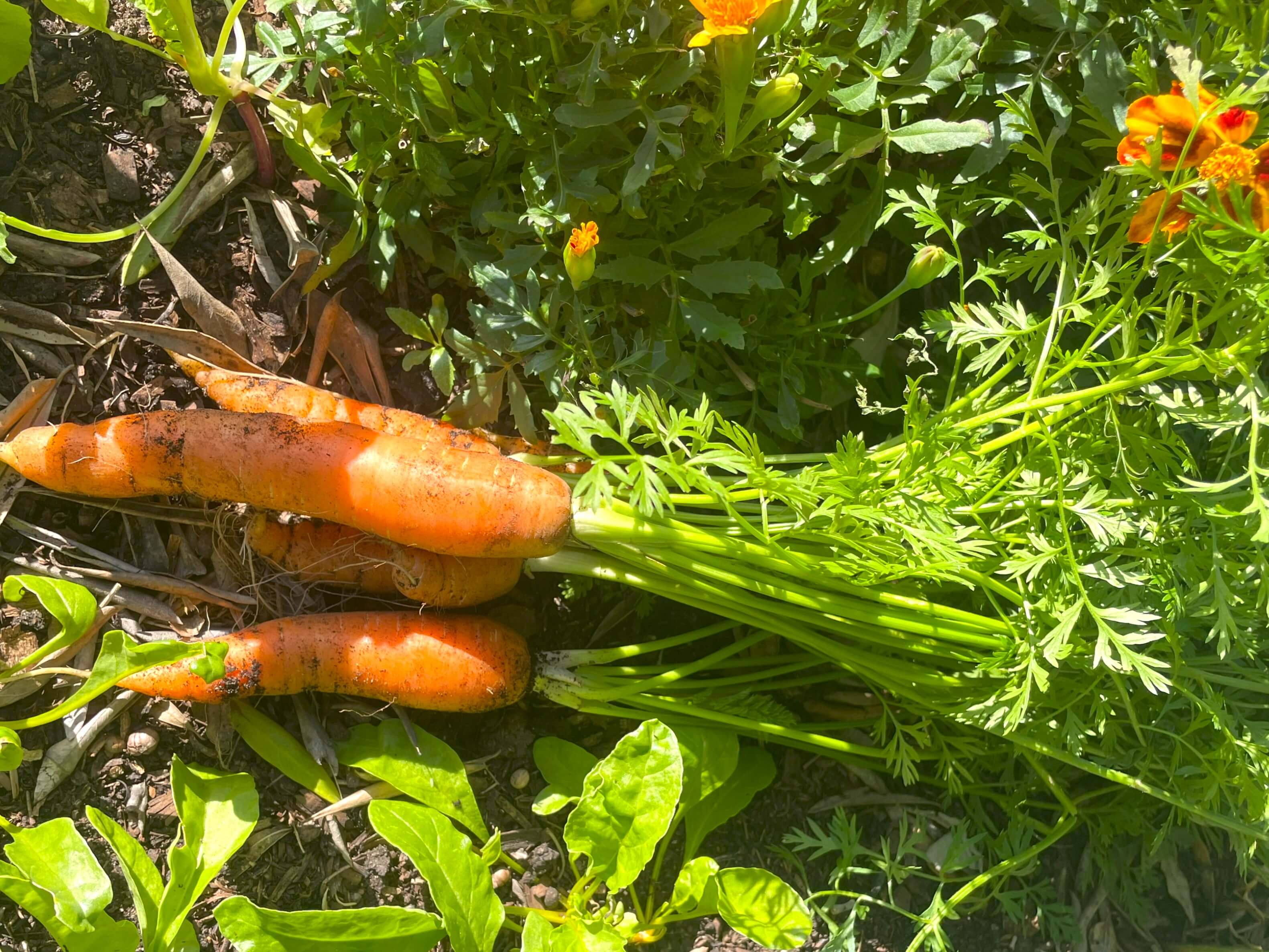
Why the effort to grow your own carrots?
Homegrown carrots taste different. Carrots are one of the vegetables where there is a big difference in taste between store-bought and homegrown. They don’t just taste more intense but also have better texture. Carrots are also great in small gardens or even in containers on a balcony. Although they want full sun, carrots thrive in the cooler growing season and actually taste sweeter after a light frost. This means they are great to grow in moderate climates.
Here are my takeaways from a great to bad to great harvest.
Improving Carrot Germination
Even though you can sometimes find seedlings at a nursery, carrots don’t like to be transplanted. The taproot, which will become the carrot itself, should be minimally disturbed. So, it’s better to direct sow.
The tiny carrot seeds can be tricky to germinate. It can take 2 to 3 weeks for them to germinate, and it’s important not to neglect them during this time. They will need consistent moisture.
One option is to direct sow them when the weather forecast is cool, cloudy, and predicting light rain for several days or more. It will still require frequent watering and check-ups.
The other option is to direct sow into a well-watered bed and put a wooden plank over the soil until the majority of seeds have germinated. The plank ensures that the soil remains moist, but it will not prevent the seeds from germinating because they don’t require light. Once the majority of the seeds have come up, the plank can be removed.
In either case, it is best to make a:
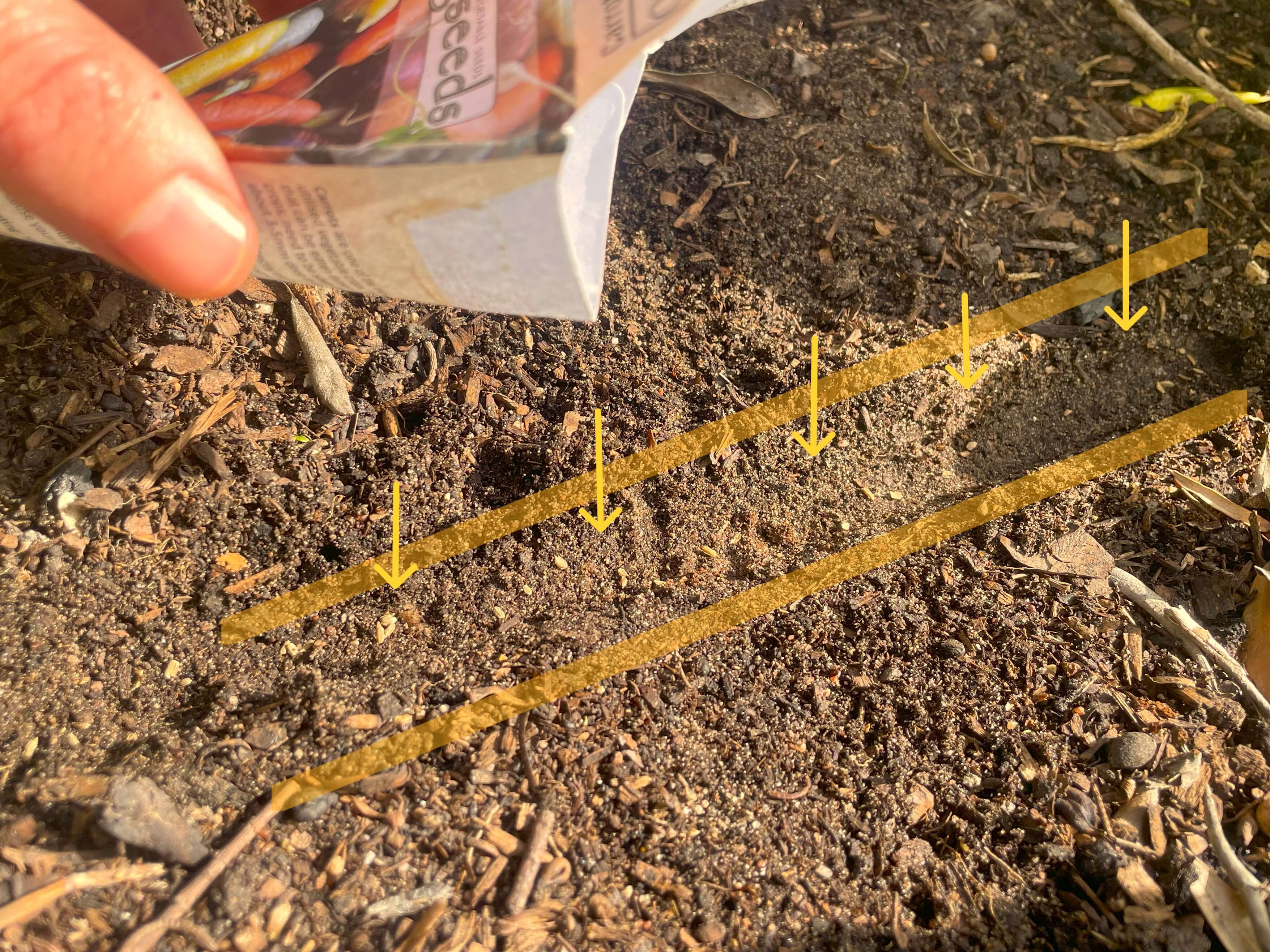
- shallow trench, about a 1 cm deep, sprinkle the seeds, and cover them with soil.
- Don’t bury them too deep. Lightly compact the soil to make sure there is good contact with the seeds.
- Water them in gently but avoid having the seeds washed away. That’s why it is important that the soil is moist before sowing.
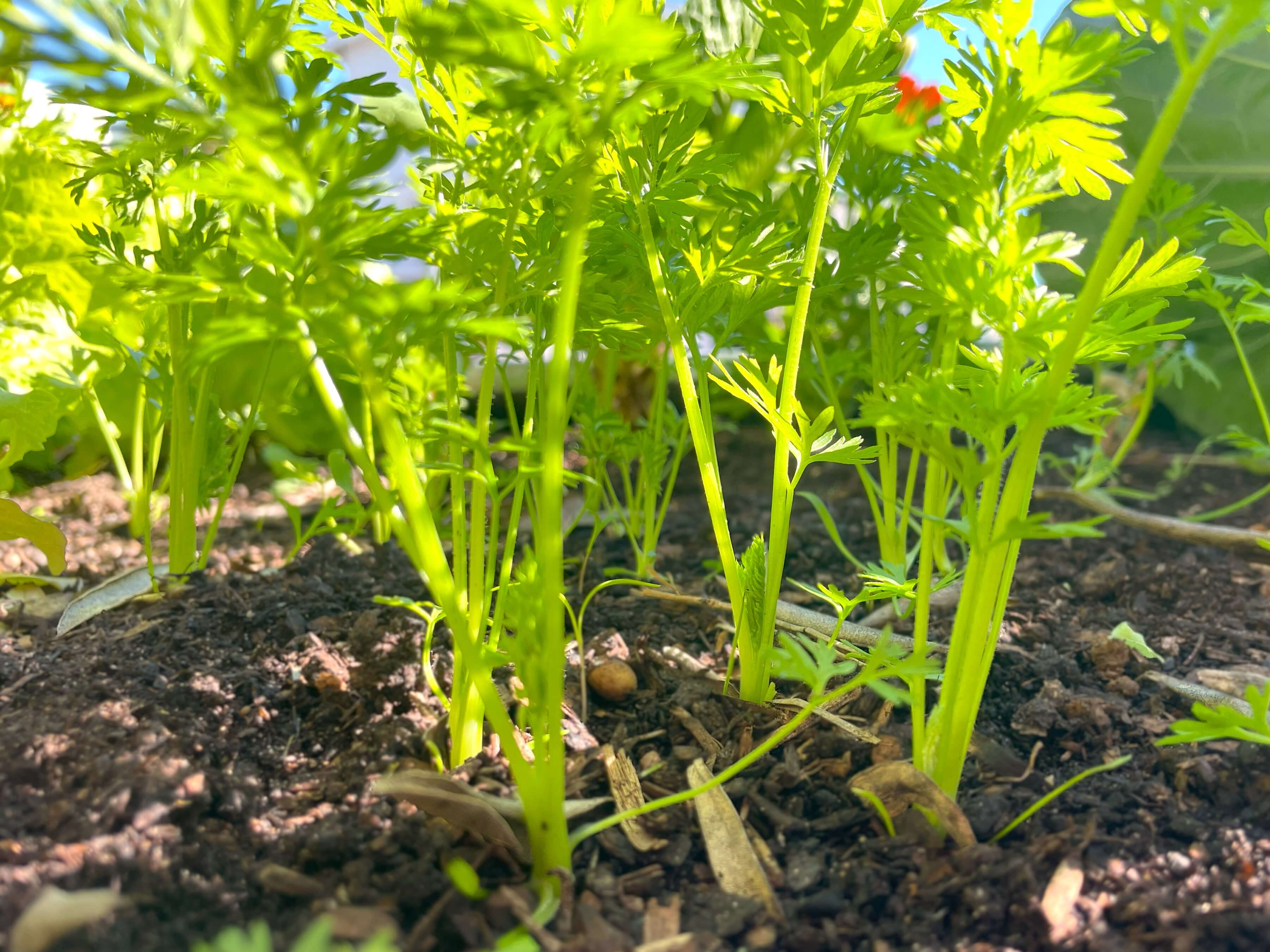
Spacing or thinning carrots?
The seeds can be sown with about 5 cm spacing. But with them being tiny, this can be tricky, especially for a large area. It might therefore be easier to sow densely by just sprinkling the seeds and then thin them after they have germinated. This will also ensure that there are no gaps in case of spotty germination. It is important to give them enough space, otherwise the carrots will not grow to their potential.
Best soil for growing carrots
Loose, well-draining soil that is on the sandy side is ideal for carrots. It should also not contain any rocks or other debris, which could disturb the root in its growth and lead to stunting. A more clay-rich soil might make it harder for the carrots to grow big in the soil, and they could break off in the hard soil when harvesting. Carrots don’t need a ton of nutrients, but compost should be incorporated before planting into the soil. Too much nitrogen will lead to lush greens instead of big roots. However, I have found that some kelp or fish fertilizer throughout the growing season gives them a boost.
Best time to plant carrots
Besides the soil quality, timing is probably the biggest factor. I have a long growing season; in fact, I can grow year-round. But there is a specific window when carrots thrive. For me, they grew best when planted in late winter, just when the days are starting to get longer with some sunny days but no high temperatures. This way they take off quickly and can mature before the summer heat.
The other possibility is to grow them for an autumn harvest, but this would require them to be sown in mid-summer for a harvest before winter. Although a light frost will make them nice and sweet, they should be fully matured, otherwise they will not grow much anymore in the shorter days. Sowing them in mid to late summer, I struggled with germination. In the summer heat it is more difficult to keep the soil nicely moist for long enough for them to come up.
FAQ on growing carrots
- Sowing depth: max 1 cm
- Germination time: 2-3 weeks
- Spacing: 5 cm (sow densely and thin after germination)
- Time to harvest: depends on variety and season, 75-90 days
- Can you grow carrots in containers: Yes, needs about 30cm depth
- Soil: well-draining, loose, sandy soil, no rocks and other debris
Growing carrots has taught me patience, timing, and the importance of getting the basics right. It is well worth sticking it out and keeping trying. When you get it right, the rewards are delicious. And homegrown always tastes better.
Another very rewarding cool season crop is broccoli. Find more here for tips on how to grow broccoli and on harvesting and flowering.