Common Problems Growing Tomatoes
Tomatoes are one of the most popular vegetables to grow at home, which makes it easy to assume they must also be easy to grow. I thought the same during my first season, until my plants started struggling and I couldn’t figure out what I was doing wrong.
Tomatoes are not foolproof. They can be finicky, especially in more humid conditions disease can spread fast and once a plant becomes stressed, it’s not always easy to bring it back to health. The causes aren’t always obvious, and finding the right fix can involve some trial and error.
Below are some of the most common tomato growing problems and potential solutions to help you get back on track. While it’s almost inevitable that your plants will suffer from something eventually, these tips can help keep them healthy for as long as possible.
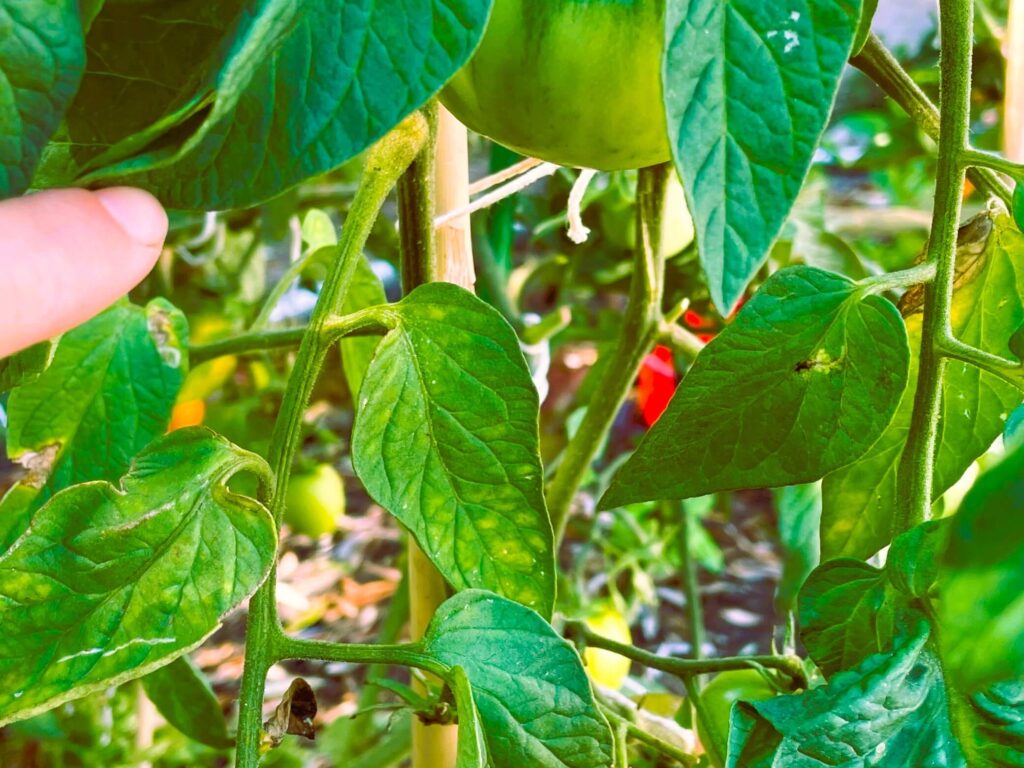
1. Wilting, Curling, or Drooping Leaves
If your tomato plant looks sad and droopy, don’t panic — but do investigate.
Possible causes:
- Too much or too little water
- Transplant shock
- Heat stress or strong wind
- Overfertilizing (more common with synthetic fertilizers)
What you can try:
- Check your soil moisture not just on the surface but a few centimeters down. Water deeply but not too often. Overwatered plants can look just as droopy as thirsty ones.
- In hot weather, leaves may curl slightly to conserve moisture. You can provide some shade with shade cloth during heatwaves.
- After transplanting, give your plants a few days — some initial stress is normal. If you planted your seeds indoor, make sure you harden off the seedlings before planting outside. You can do that over the course of 1-2 weeks by taking them outside everyday and slowly acclimatizing them to the conditions and mainly the sun. Start out slow and in the shade.
- Windy spots can cause stress. A sturdy trellis can help stabilize the plant.
- Strong synthetic fertilizers might be to readily available for the plants leading to a ‘burn’. Organic options like fish or kelp emulsion are gentler and slow releasing. But don’t neglect nutrition, underfeeding can also stress the plant.
2. Yellowing Leaves
Yellowing leaves can have several causes, but usually it points to either a nutrient issue or water imbalance.
Possible causes:
- Nitrogen deficiency or another nutrient imbalance
- Overwatering or poor drainage
What to do:
- Feed with a balanced organic fertilizer to support healthy leaf growth.
- Make sure your soil drains well and avoid waterlogging.
3. Leaf Miners (Squiggly Lines in Leaves)
These are one of the more distinctive signs something is wrong.
What it looks like: Pale, winding lines or trails inside the leaves.
Cause: Tiny larvae burrowing and feeding inside the leaf.
Fixes to try:
- Remove affected leaves as soon as you notice them and dispose of them (don’t compost).
- For Tuta absoluta I have used the water trap with pheromone lure. I combined this with Bt (Bacillus thuringeinsis) which targets the tomato leaf miner but also the bollworm and cutworm. This was effective for my garden.
- Neem oil could also help in some mild cases but is especially helpful against aphids, whiteflies, and fungal disease.
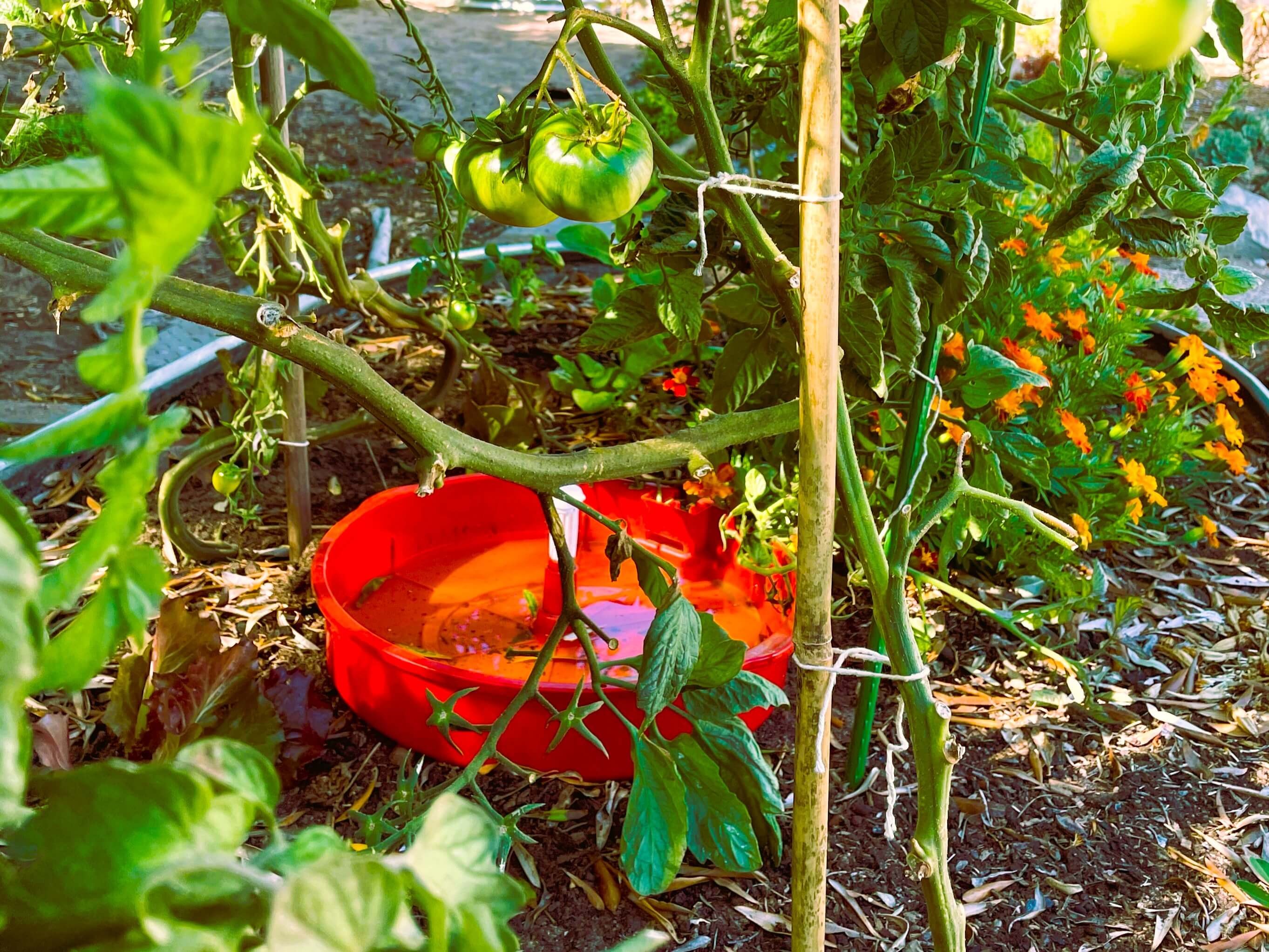
4. Flowers But No Fruit
It can be frustrating when your plant is blooming, but nothing follows.
Possible causes:
- Heat stress
- Inconsistent watering
- Too much nitrogen during the flowering stage
Solutions:
- Check your planting time against the ideal local temperatures. Although the range may vary depending on the variety, tomatoes grow optimally in temperatures around 25C. The minimum temperature is 10C and the maximum 35C. The plants will not set flowers, they will drop, or not fruit.
- Water consistently — tomatoes don’t like sudden changes.
- At this stage, avoid high-nitrogen fertilizers, which promote leaves at the expense of fruit.
5. Blossom End Rot
What it looks like: Black, sunken spots on the bottom of the fruit.
Cause: Calcium deficiency which can be linked to inconsistent watering preventing the plant to access the needed nutrients or the nutrients in the soil are depleted. This can be the case when growing in containers.
Fixes to try:
- Water evenly and regularly.
- Use mulch to help regulate moisture levels.
- Avoid over-fertilizing and choose a balanced fertilizer.
- In containers, nutrients are depleted faster, feed and water regularly.
- I’ve noticed in my garden it often affects the first fruit of the season but clears up after that. It could be due to early-season conditions or my water schedule.
6. Cracked or Split Fruit
Cause: A sudden flush of water after a dry period causes the fruit to swell too quickly causing the skin to split.
Fixes to try:
- Keep watering consistent, don’t overwater especially once fruit has formed.
- Mulch can help prevent moisture swings.
A Few Overall Tomato Growing Tips
No matter what issues you’re dealing with, a few good habits can help prevent many problems:
- Tomatoes like full sun and nutrient-rich soil.
- Prune lower leaves and suckers to increase airflow. Most disease will come from the soil up.
- Use sturdy trellising to support growth and reduce stress.
- Space plants well to prevent fungal spread.
- Feed regularly, water consistently, and observe your plants closely.
- Plant a few different varieties, from cherry tomatoes, to slicing, and paste tomatoes. Determinate and indeterminate. Take notes on how they perform for the next season. In my experience, I have less problems with cherry tomatoes. They also ripen earlier in the season. This way you have something to snack on even if some of the others don’t perform as well.
- Towards the end of the season the plant will get some kind of disease.
Final Thoughts
Tomatoes can be incredibly rewarding, but they do keep you on your toes. If your plants are having a hard time, don’t give up — a lot can be learned from one rough season. Many problems have overlapping symptoms and causes, so be patient and keep experimenting. Sometimes, a small change makes all the difference between frustration and a delicious homegrown harvest.
Related Posts
If you found this interesting check out some of these posts: